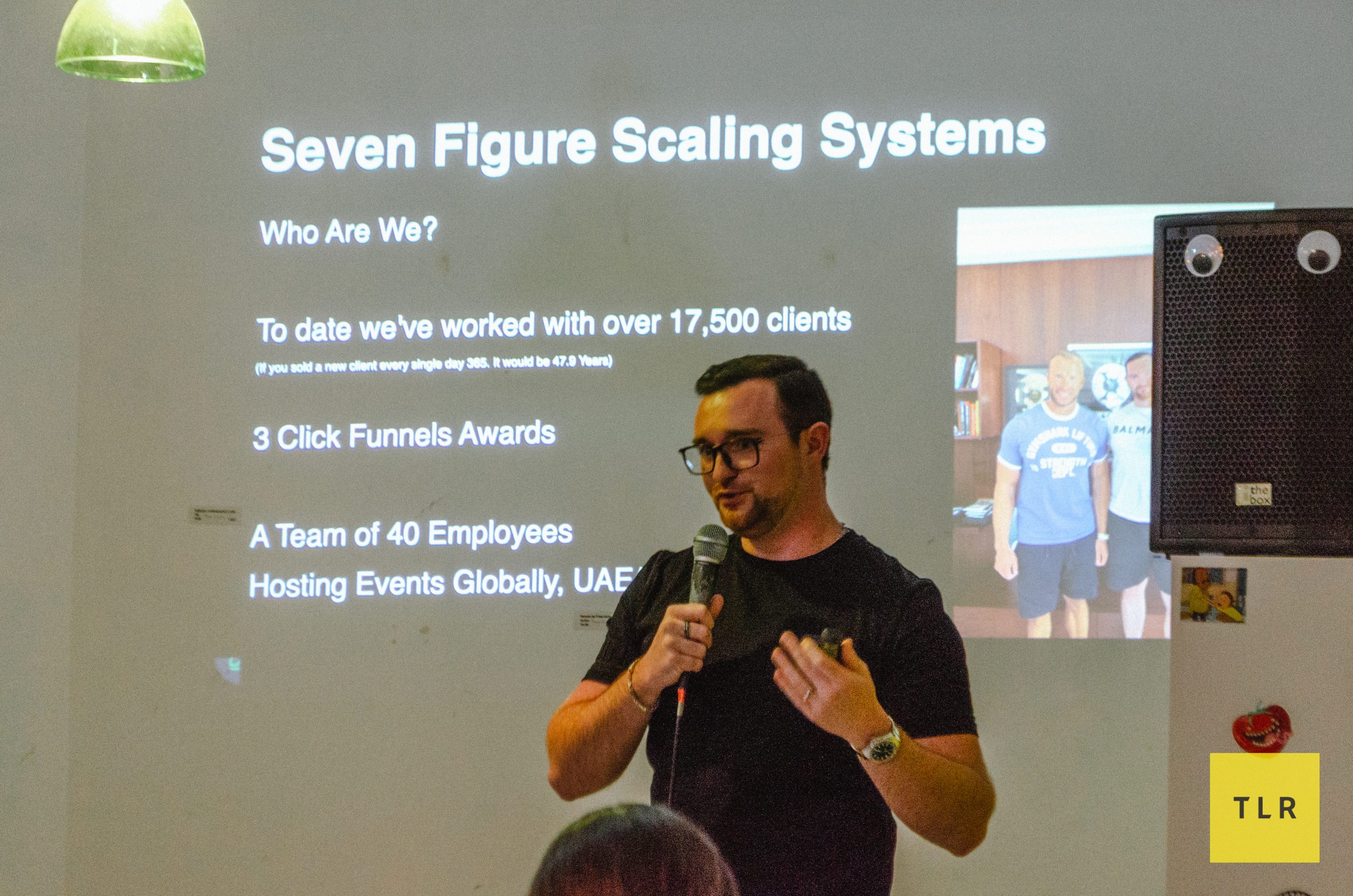
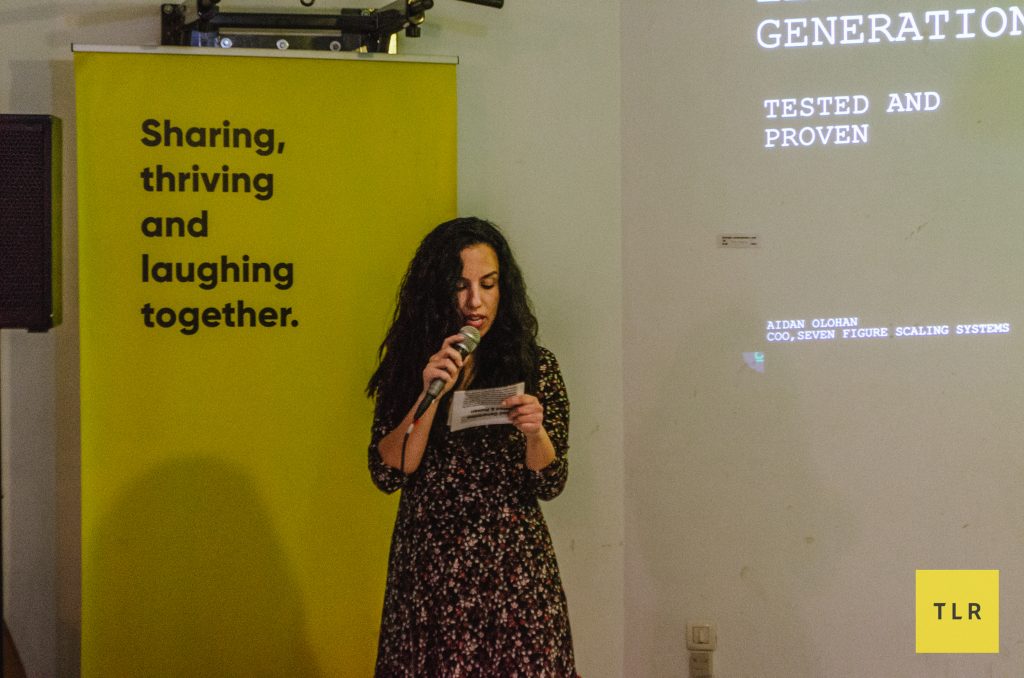
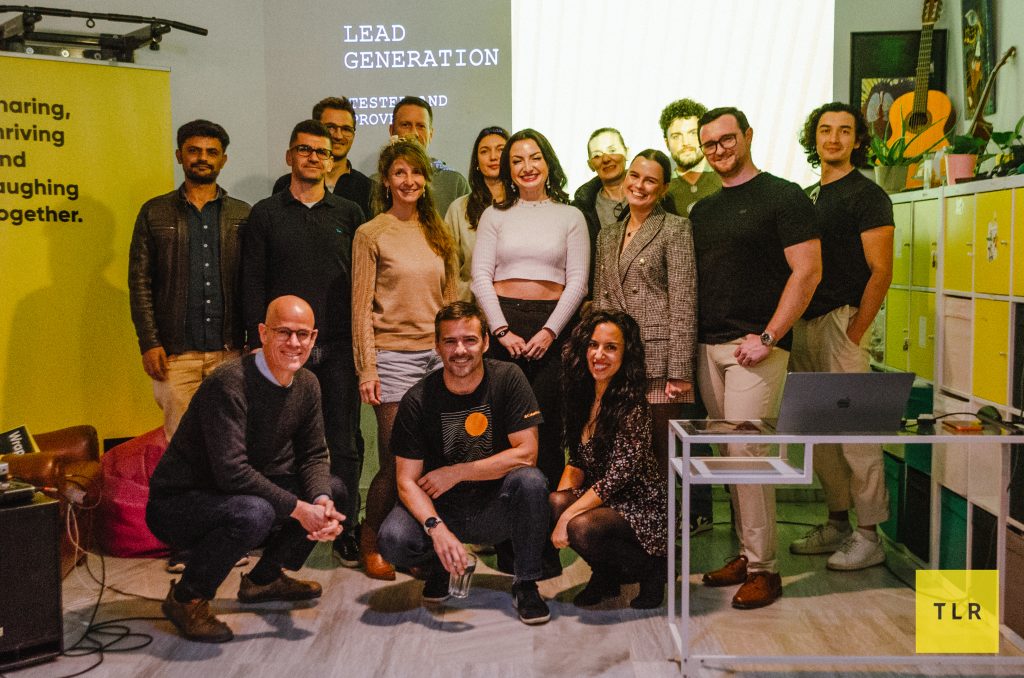
Once a month, our TGIF event invites one member to share a skill, a story, or a system that might help the rest of the TLR Family work (or live) better. This time, we zoomed in on a topic that quietly sits underneath almost every business goal: lead generation.
It is a subject that many people talk about, but far fewer can explain clearly from start to finish. At this session, our member Aidan did something rare: he made lead generation feel simple by walking us through the process end to end. Not “more followers”, not “better branding”, not “going viral”. Just the practical question of how to turn attention into conversations, conversations into calls, and calls into clients.
Aidan shared the lead generation frameworks he has used in the online coaching space over the last five years, first in B2C and later in B2B. He now runs a company focused on backend operations and scaling systems, and spoke from the point of view of someone who lives inside processes, numbers, and repeatable actions.

The opening message was simple: most businesses do not have a sales problem. They have a lead flow problem.
In other words, if your calendar is empty, it is rarely because you cannot sell. It is because not enough qualified conversations are happening in the first place.
That framing alone was a relief for a lot of people in the room. It takes the pressure off “being good at sales” and puts the focus back where it belongs: building a system you can run consistently.
The frameworks they shared were not just theoretical either. Their systems have been tested across more than 17,000 client conversions, helping online coaches scale from struggling to consistent high-revenue months.
Lead generation, defined
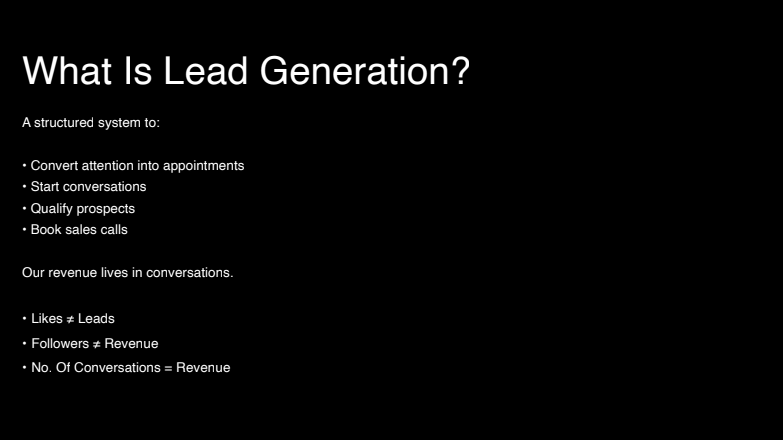
Aidan’s definition was refreshingly clear: lead generation is converting attention into appointments.
Not likes. Not reach. Not follower count.
He stressed that followers have no direct correlation to revenue, and that you can find examples at both extremes: huge audiences that struggle to monetise, and small accounts that generate serious income because they turn attention into actual conversations.
From there, the process becomes a simple cycle:
Content creates interaction. Interaction creates conversations. Conversations are qualified and moved toward a call. Calls create clients. Clients create results. Results create testimonials and referrals. And the cycle strengthens.
If you rely mostly on referrals, you can still grow, but you often end up waiting. You deliver the work, you hope the client is happy, you hope they refer, and revenue can fluctuate. A consistent lead gen system creates something many freelancers and founders crave: predictability.
Before lead generation: your offer must be positioned correctly
Before diving into tactics, Aidan also made an important point that often gets overlooked.
If the wrong people are showing up, or no one is showing up at all, the issue may not be your lead generation strategy. It may be your offer.
Your positioning determines who you attract and whether your message resonates with them. If the offer is unclear, too broad, or aimed at the wrong audience, even a strong lead generation system will struggle.
Getting the offer right first makes everything else easier. Once the positioning is clear, the lead generation system simply becomes the engine that brings the right people into the conversation.
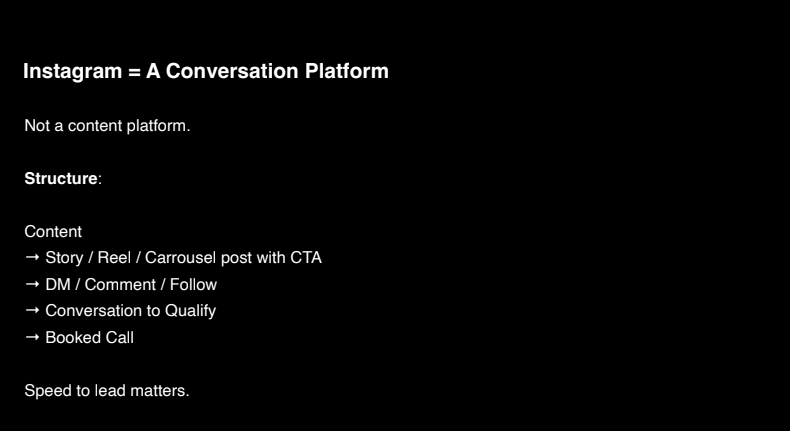
Instagram is not a content platform
One of the most useful reframes from the talk was this: Instagram is not really a content platform. It is a chat platform.
In Aidan’s view, the post itself is often just an excuse to start a conversation. The goal of content is not perfection. The goal is interaction that opens a door.
This also explains why people can “like” your posts forever without buying. Awareness is not intent. Many people will watch, engage lightly, and disappear. That is normal.
The system, then, is designed to make the next step easy. Content leads to a comment, a follow, a reply, a DM. And your job is to turn that moment into a real conversation that moves somewhere.
This is also where speed matters. Aidan shared a core value they apply to business testing: success loves speed. Progress over perfection. Test quickly, learn quickly, improve quickly.
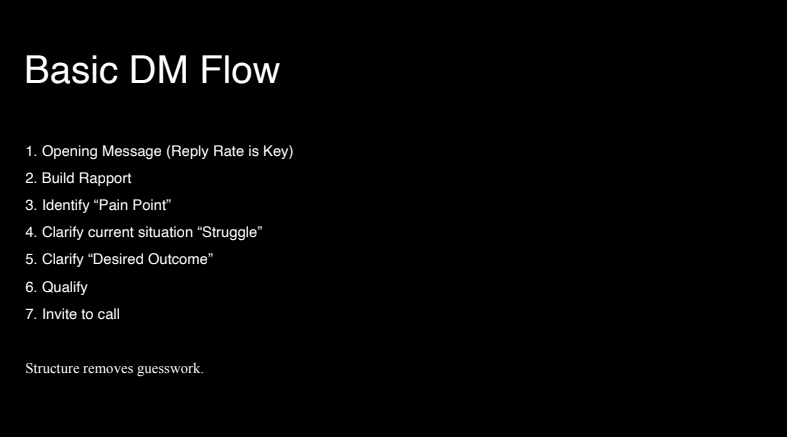
The DM script is not a pitch
Aidan was very clear on one thing: your opening message is designed to do one job only. Get a reply.
It is not a pitch. It is not a sales page in someone’s inbox. It is an icebreaker.
He shared examples of low friction openers, like asking a new follower what made them follow, or whether they found you through Instagram or a referral. The magic is that the message is easy to answer, which increases reply rate, which increases opportunities, which makes the whole system work.
From there, the “script” is really a set of questions that guides you through three essentials:
- The pain point
- The struggle, meaning why they have not solved it yet
- The desired outcome
Once those are present, the lead generation job is done. You can offer a call, and the sales conversation becomes much easier because context has already been gathered.
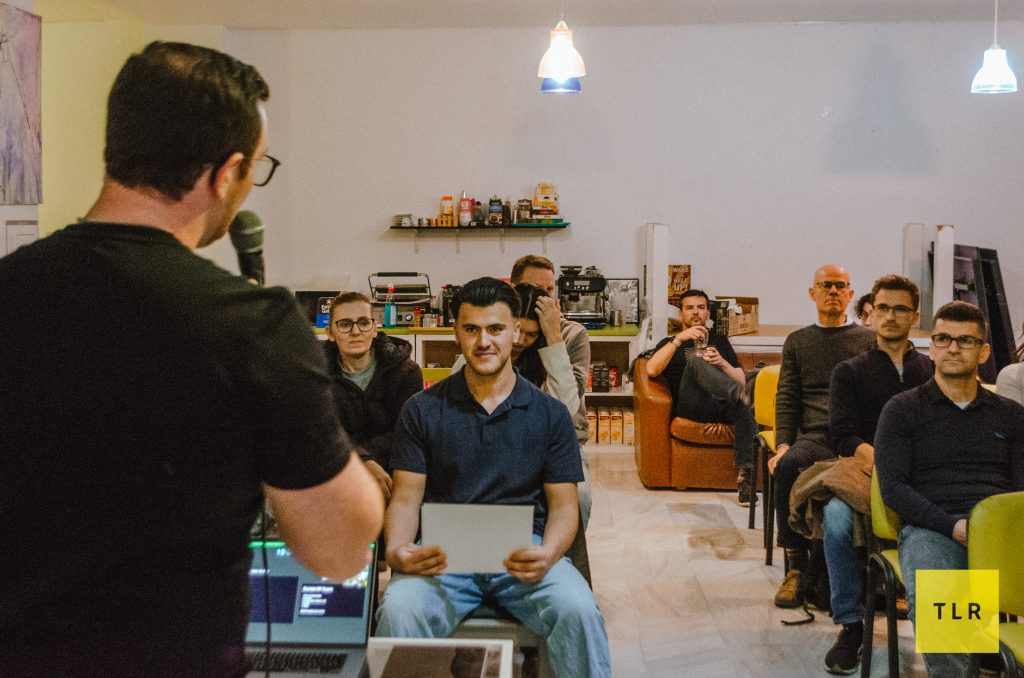
Follow-ups, volume, and the fear of looking desperate
Aidan also addressed something that makes many people uncomfortable: follow-ups.
He said most sales come from follow-ups, even at scale. Many people avoid them because they do not want to look pushy or desperate. His take was blunt: if your goal is to sell, you should be trying very hard to sell. The difference is doing it with structure and variety, not awkward pressure.
He described a follow-up approach where you send multiple follow-ups before giving someone a break, varying the tone and intent. Some follow-ups are direct. Some are light. Some are humour-based. The goal is not to annoy people. The goal is to reopen the loop and get a simple reply so the conversation can continue.
He also pushed back on the fear of “burning your audience,” arguing that for most businesses it is easier to find new leads than people think, especially when you focus on volume and consistency.

Track the numbers, then reverse engineer the goal
A recurring theme was tracking. If you do not track, you guess. If you guess, you cannot improve.
The KPIs Aidan returned to were:
- New conversations started
- Active conversations
- Calls booked
Once you know your reply rate and your booking rate, you can reverse engineer the target.
He walked through an example: if you want €10,000/month, and your offer is €2,000, you need 5 closes. With a 30% close rate, you need 15 shows. With a 60% show rate, you need 25 calls booked. From there, you work backwards into how many conversations you need to start each week and each day.
The point was not that everyone should send huge volumes immediately. The point was that when you understand the maths, lead gen stops being emotional and starts being operational.
Which platform should you use
Aidan’s platform view was practical.
He said YouTube can be powerful but slow. TikTok can be easy for views but difficult to monetise. LinkedIn is information-rich because you can often see who someone is and what they do, but it can be crowded and, on the ads side, expensive. Instagram is often the easiest to start with, especially when it comes to low-friction conversations and ads.
For someone choosing one lane, his broader recommendation was to double down where you already have proof of concept. When something is working, it is usually smarter to do more of that than to spread yourself thin across platforms.
He also answered questions about signals of intent on LinkedIn, mentioning profile views and comments as strong indicators, because they suggest curiosity even when someone does not engage publicly.
Email also came up. His view was that email can work, especially with the right offer and a warm list, but reply rates tend to be lower and it is a different style of communication. Like everything else, it works when you build the system and commit to it.
Scaling without drowning
One of the best audience questions was about scale: what if you are a freelancer and lead gen works, but you cannot fulfil all the demand?
Aidan’s answer was essentially: do not try to solve problems that have not happened yet. Build the system. Let it create pressure. Then solve the bottleneck that appears.
He brought it back to a simple idea he repeated earlier: many business problems are solved with people or money. Once revenue becomes more predictable, you can hire, delegate, or systemise.
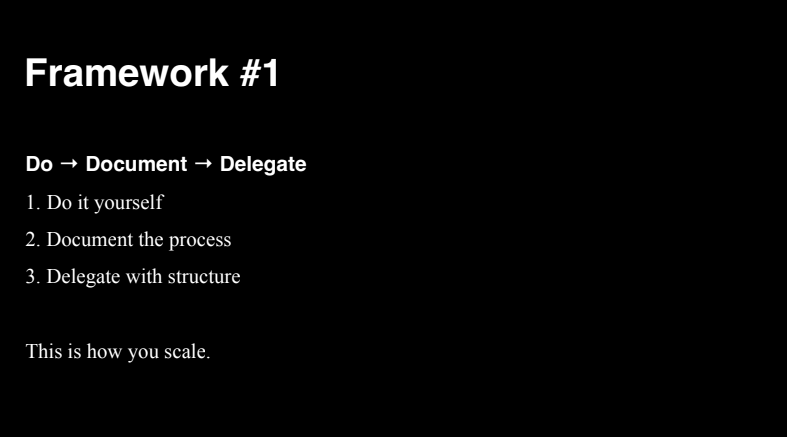
He shared the framework they use internally: document, then delegate. Do it yourself first so you understand the process. Document it. Then hand it off, whether to a contractor, a team member, or an appointment setter once the system is proven.
He also mentioned Notion as a tool they use to manage scale and accountability, using simple daily checklists that make “doing the job well” measurable, even when motivation is not constant.
A simple takeaway to try this week
If you want one practical action from the talk, it is this:
Pick one platform. Define your offer in one clear sentence. Create content with one purpose: start conversations. Send a low-friction opening message that aims only to get a reply. Track how many conversations you start and what happens next. Then adjust.
Lead generation gets easier when you stop treating it like a personality trait and start treating it like a process.
Are you a TLR member with a story to tell? Let the TLR team know. We’re always excited to hear what you’re working on. And who knows? Next month YOU could be giving the TGIF!
To attend the TGIF, or any TLR event, you must be a TLR Family member, or the guest of one. Our subscriptions start from €50/month. If you’re not yet a member and would like to get involved, check out our subscription and book a free trial day here: https://tlr-coworking.com/subscriptions/